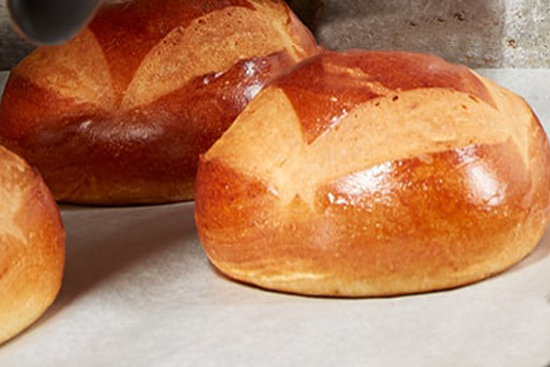
soft, fluffy bread, a buttery interior, that signature crispy bottom, and just the right hit of salt on top.
Ingredients
–400 grams bread flour
–120 grams cake flour
–30 grams non-fat milk powder
–26 grams sugar
–10 grams salt
–365 grams ice-cold water
–40 grams cold unsalted butter, coarsely grated straight from fridge
–7 grams instant dry yeast
–12 (15-gram) chunks butter
–Flaky salt
Preparation
How To Make Shio Pan (Japanese Salt Bread)
STEP 1: Add both flours, sugar, salt, and non-fat milk powder to the bowl of a stand mixer fitted with the dough hook attachment. Pour in the cold water — and yes, it really does need to be cold. I stuck mine in the fridge overnight to make sure it was properly chilled, but if you forgot, tossing a couple of ice cubes in your water for a minute works too. Mix everything on low speed until it comes together into a shaggy, slightly messy-looking dough.
STEP 2: Next up: the butter. And just like the water, it should be cold straight from the fridge, not softened. Add the unsalted butter to the dough, then bump the mixer up to medium speed and let it knead until smooth. This part takes some patience. The recipe calls for 15 to 25 minutes, but my dough needed 30 minutes.
It’s pretty sticky, and you will be tempted to add more flour. Resist the urge and trust the process. Keep kneading and check in every five minutes or so to do a quick windowpane test (stretching a small piece of dough until it's translucent enough that light can shine through it). Once the dough pulls cleanly away from the bowl and stretches thin without tearing right away, you’re good to go.
STEP 3: Shape the dough into a tight, smooth ball and place it back in the bowl. Cover it and let it rise until doubled in size. In my kitchen (which was around 78°F), this took about one hour.
Dough ball on a silicone mat, ready for baking on a kitchen countertop
STEP 4: While the dough rises, cut the salted butter into small 1-inch pieces. These will go inside the rolls later and create that signature buttery center.
STEP 5: Once the dough has doubled, give it a quick poke test. If you press a finger into the center and the indent stays put without springing back, it’s ready. Gently punch the dough down to release the gas, then divide it into 80-gram portions. I ended up with 12 pieces total.
STEP 6: Roll each portion into a smooth ball. Cover them with a towel and let them rest for 15 minutes. Start the timer as soon as you shape the first one so they all rest evenly.
STEP 7: Now for the shaping. Take one dough ball and roll it into a long teardrop shape, with a wide top and narrow bottom. Using a rolling pin, start from the center and flatten the bottom half of the dough, lightly stretching it with your hand as you go. Then, flatten the wider top half. Once you get the hang of it, it doesn’t take long to roll out each piece (my 7-year-old had it down pat after two tries).
STEP 8: Place a piece of salted butter on the wide end of the dough. Starting there, roll the dough down toward the narrow tip, tucking and guiding it with your fingers as needed so everything stays snug.
STEP 9: Place the shaped rolls seam-side down on a baking tray. Cover and let them rise again until doubled in size. This took about another hour in my kitchen.
STEP 10: Preheat the oven to 450°F. Spritz the rolls with water, then top each one with salt. I used flaky sea salt since I didn’t have pretzel salt on hand.
Four uncooked croissants on a tray being sprayed with water
STEP 11: Right before baking, give each roll a generous second spray of water, about 20 pumps per roll. Then lower the oven temperature to 400°F and bake for 12 to 15 minutes, rotating the pan halfway through. Mine needed the full 15 minutes to get nicely golden.
Four baked crescent rolls on a tray, sprinkled with salt, alongside a blue brush
There’s one final step that isn’t written on her website, but Erin shares in her TikTok video, and it’s a crucial one. As soon as the rolls come out of the oven, brush them with the butter that melted out during baking. Yes, you’re essentially basting the bread, and honestly, it might be the best step of the entire process. Don’t skip it.
Four freshly baked croissants on a baking tray, brushed with butter and sprinkled with salt
Pin
Advertisement
The recipe recommends using a nonstick pan so the buttery bottoms release easily. I only had one small nonstick pan, so I baked the rest on a regular aluminum tray. They stuck a tiny bit, but sliding an offset spatula underneath did the trick. I found that the batch that baked on the aluminum tray actually had browner, crispier bottoms.
Two freshly baked bread rolls on a white oval plate, set on a wooden surface
I won’t pretend that this was quick or easy. Anyone who’s made bread from scratch before will tell you that it’s not an instant gratification kind of bake. Between mixing, kneading, dividing, and shaping the dough, it took me about two hours just to get everything prepped, and that’s not even counting the proofing time in between or the actual baking (which is actually the quick part). So if you’re looking for a fast, hands-off recipe, this definitely isn’t it.
Four freshly baked croissants topped with salt flakes rest on a wire cooling rack
But if you enjoy a good weekend baking project? Then Erin’s salt bread is absolutely worth the time and effort.
Freshly baked crescent rolls arranged on a cooling rack, sprinkled with coarse salt
The payoff is a batch of warm shio pan with everything that makes them so special: soft, fluffy bread, a buttery interior, that signature crispy bottom, and just the right hit of salt on top. Honestly, the reaction from everyone I shared them with said it all — every single person was impressed by the shio pan.


 main ingredients:
type of recipe:
bread
cuisine:
Japan
specific recipes:
entertaining
Type of meal:
breakfast
main ingredients:
type of recipe:
bread
cuisine:
Japan
specific recipes:
entertaining
Type of meal:
breakfast